

Water damage often begins when you least expect it. A burst pipe during a winter freeze, a leaking water heater, an overflowing washing machine, a damaged roof after a coastal storm, or heavy rainfall can quickly allow water to spread throughout a home or commercial building. In Bear and across Northern Delaware, water damage is a common property emergency because the region experiences year-round weather events, aging plumbing systems, and seasonal storms that place additional stress on buildings.
Once water enters a structure, it does not stay in one place. Drywall, insulation, flooring, cabinetry, and structural framing absorb moisture quickly, allowing water to travel well beyond the area where the leak first occurred. If moisture remains inside the building, structural materials continue to deteriorate, and mold can begin growing within 24 to 48 hours when conditions are favorable.
Professional water damage restoration follows the ANSI/IICRC S500 Standard for Professional Water Damage Restoration. Certified restoration professionals inspect the property, identify hidden moisture using specialized equipment, remove standing water, establish controlled structural drying conditions, monitor moisture throughout the project, and verify that drying goals have been achieved before equipment is removed. Every decision is based on measurable moisture readings rather than visual appearance alone.
Whether you own a home in Bear, manage commercial properties in Newark, oversee facilities in Wilmington, or support customers as an insurance professional anywhere in New Castle County, understanding the restoration process makes it easier to navigate a water loss with confidence. This guide explains each stage of professional water damage restoration from the initial inspection through final moisture verification.
Understanding Water Damage Throughout Bear and New Castle County
Water damage affects nearly every type of property throughout Northern Delaware. Single-family homes, apartment communities, office buildings, healthcare facilities, schools, retail centers, warehouses, and industrial facilities all experience water losses caused by plumbing failures, weather events, and mechanical system malfunctions.
Northern Delaware's location near the Delaware River and Atlantic coastline creates restoration challenges throughout the year. Heavy rainfall, tropical storm remnants, nor'easters, and localized flooding regularly affect New Castle County. During the winter months, freezing temperatures can cause plumbing lines to freeze and burst, while spring and summer storms often produce wind-driven rain that finds its way through damaged roofing systems and building envelopes.
Construction styles throughout the region also influence how water behaves once it enters a structure. Historic homes in Wilmington, New Castle, and Montchanin often include hardwood flooring, plaster walls, masonry construction, and older plumbing systems that require specialized drying strategies. Newer homes in Bear, Newark, and Saint Georges frequently feature finished basements, engineered wood products, open floor plans, and energy-efficient construction that can allow moisture to migrate into concealed spaces before visible damage appears.
Commercial buildings present another level of complexity. Office buildings, healthcare campuses, schools, retail centers, warehouses, manufacturing facilities, and distribution centers throughout New Castle County often contain extensive plumbing systems and mechanical equipment that serve multiple occupants. A single plumbing failure can affect several offices, suites, or production areas before anyone discovers the source.
Because water continues moving through porous building materials, professional restoration begins by determining how far moisture has traveled throughout the structure instead of focusing only on visible damage.
Common Causes of Water Damage in Northern Delaware
Every successful restoration project begins by identifying how water entered the building. Correcting the source allows technicians to stabilize the property while developing a drying plan based on the actual moisture conditions found during the inspection.
Throughout Bear, Newark, Wilmington, Claymont, Hockessin, New Castle, Saint Georges, Yorklyn, Montchanin, Rockland, Winterthur, and surrounding communities, plumbing failures remain one of the leading causes of water damage. Burst supply lines, leaking pipe fittings, failed water heaters, broken washing machine hoses, refrigerator supply lines, and overflowing dishwashers can release large amounts of water into homes and businesses before occupants notice a problem.
Weather also contributes to many restoration projects throughout Northern Delaware. Coastal storms, heavy rainfall, tropical systems, and nor'easters can damage roofing systems or allow water to enter around flashing, chimneys, skylights, and roof penetrations. Wind-driven rain often reaches attic spaces and wall cavities, allowing moisture to spread well beyond the original entry point.
Basements and crawlspaces are particularly vulnerable after prolonged rainfall. Saturated soil surrounding foundations increases hydrostatic pressure against foundation walls, while clogged gutters, poor exterior drainage, sump pump failures, or overwhelmed stormwater systems can allow water to enter below-grade spaces. Once moisture enters these hidden areas, it often spreads into insulation, framing, and finished living spaces before becoming visible.
Commercial facilities face additional challenges because of their size and building systems. Warehouses, manufacturing facilities, healthcare buildings, office complexes, schools, and retail centers often contain extensive plumbing infrastructure that serves large portions of the building. A water loss occurring overnight or during weekends may affect multiple areas before maintenance personnel discover the problem.
Finding the source of the water intrusion is always one of the first priorities during a professional inspection. Once the source has been corrected, certified restoration professionals can begin removing moisture from both visible and hidden portions of the structure.
Understanding Water Damage Categories and Classes
Professional water damage restoration follows the ANSI/IICRC S500 Standard, which classifies every water loss according to the quality of the water involved and the amount of moisture absorbed into structural materials. These classifications help determine restoration procedures, equipment requirements, drying calculations, safety protocols, and project documentation.
Water Damage Categories
The ANSI/IICRC S500 Standard identifies three categories of water based on contamination levels present during the inspection.
Category 1 water originates from a sanitary source and presents minimal health concerns under normal conditions. Examples include broken water supply lines, certain appliance leaks, and overflowing sinks supplied by clean water.
Category 2 water contains a greater level of contamination that may cause discomfort or illness following exposure. Washing machine discharge, dishwasher overflows, and some plumbing failures may be classified as Category 2 depending on the conditions at the property.
Category 3 water contains significant contamination and requires specialized restoration procedures. Sewage backups, floodwater entering a building, and other highly contaminated water sources require additional containment, engineering controls, cleaning procedures, and documentation throughout the restoration process.
Water categories can change over time. Water that initially begins as Category 1 may become increasingly contaminated as it remains inside the structure and comes into contact with building materials and environmental contaminants. Beginning restoration promptly often helps limit that progression.
Water Damage Classes
Water damage classes describe how much moisture structural materials have absorbed and how much evaporation is expected during the drying process.
Class 1 involves minimal moisture absorption with relatively low drying requirements.
Class 2 includes greater moisture absorption affecting walls, insulation, carpeting, and flooring systems, requiring additional drying equipment and monitoring.
Class 3 describes situations where water has saturated structural materials from the ceiling to the floor, creating the highest evaporation demand during structural drying.
Class 4 involves specialty drying situations that include dense materials such as hardwood flooring, concrete, masonry, plaster, and structural lumber that naturally retain moisture longer than standard building materials.
Understanding both the water category and the drying class allows certified restoration professionals to develop science-based drying plans that rely on measurable moisture conditions instead of assumptions.
Your Initial Inspection and Moisture Assessment
Every professional water damage restoration project begins with a comprehensive inspection. Before extraction equipment is installed or structural drying begins, certified technicians evaluate the building to determine how moisture has affected structural materials and develop the most effective restoration strategy.
Safety is always addressed first. Restoration professionals inspect the property for electrical hazards, structural concerns, contaminated water sources, and other conditions that could affect occupants or restoration personnel. Once the property has been stabilized, technicians begin identifying both visible and hidden moisture throughout the affected areas.
Professional inspections rely on specialized moisture detection equipment rather than visual observations alone. Moisture meters measure water content inside drywall, framing, flooring, insulation, cabinetry, and structural materials. Hygrometers evaluate indoor temperature and humidity, while infrared thermal imaging cameras help locate hidden moisture behind walls, beneath flooring systems, above ceilings, and inside concealed building cavities.
Detailed documentation is also created during the initial visit. Moisture readings, photographs, floor plans, equipment calculations, and written observations provide the foundation for the restoration project while supporting communication with homeowners, commercial property owners, property managers, insurance professionals, insurance carriers, and referral partners.
Whether inspecting a historic home in Wilmington, a residential property in Bear, or a commercial warehouse in Newark, every restoration plan is customized based on the building's construction, occupancy, and measurable moisture conditions before controlled drying begins.
Why Moisture Mapping Is Essential for Homes and Commercial Buildings in Northern Delaware
Visible water rarely tells the entire story after a water loss. Moisture often migrates beneath hardwood flooring, inside insulation, through framing, behind cabinetry, into finished basements, and above ceiling assemblies where it remains hidden long after standing water has been removed.
Moisture mapping creates a detailed picture of how water has moved throughout the building. Certified restoration professionals compare readings from affected materials with dry reference areas to establish objective drying goals for every portion of the structure. Every drying decision is based on measurable moisture data instead of estimates or visual observations.
This scientific approach is especially valuable throughout Bear, Newark, Wilmington, Claymont, Hockessin, New Castle, and surrounding Northern Delaware communities, where changing weather conditions, finished basements, mixed construction materials, and older building assemblies create numerous pathways for hidden moisture migration. A burst pipe in a Bear basement or a roof leak in a Wilmington office building may allow moisture to spread much farther than surface damage suggests.
Moisture mapping continues throughout the drying process. As structural materials release moisture, technicians collect new readings to verify progress and adjust equipment placement when needed. Using objective moisture measurements throughout the project helps preserve more original building materials whenever practical while confirming hidden moisture has been properly addressed before drying equipment is removed.
Professional Water Removal and Extraction
Once the inspection has been completed and the source of the water intrusion has been corrected, the next step is removing as much water from the building as possible. Every gallon extracted reduces the amount of moisture that continues soaking into drywall, insulation, flooring, cabinetry, and structural framing. Beginning extraction quickly often allows more original building materials to be successfully restored while reducing the amount of secondary damage that develops over time.
Certified restoration professionals use commercial-grade extraction equipment designed specifically for emergency water losses. Depending on the amount of standing water and the size of the affected area, technicians may use truck-mounted extraction units, portable extractors, industrial pumps, weighted carpet extraction tools, and specialty equipment for hardwood flooring and other moisture-sensitive materials. These systems remove significantly more water than consumer-grade equipment, allowing structural drying to begin much sooner.
Standing water is only part of the challenge. Moisture frequently migrates beneath flooring systems, inside wall cavities, through insulation, below cabinetry, and into structural framing where it cannot be seen. Throughout Bear, Newark, Wilmington, Claymont, Hockessin, and surrounding New Castle County communities, finished basements, crawlspaces, and multi-level homes often allow water to travel much farther than property owners initially expect. Commercial office buildings, warehouses, schools, healthcare facilities, and retail centers also require careful extraction planning because water can affect multiple occupied spaces before the source is discovered.
Professional extraction focuses on both visible water and the hidden moisture identified during the initial inspection. By removing as much water as possible before drying begins, technicians create the conditions necessary for a more efficient restoration process while preserving original building materials whenever practical.
The Science Behind Structural Drying and Dehumidification
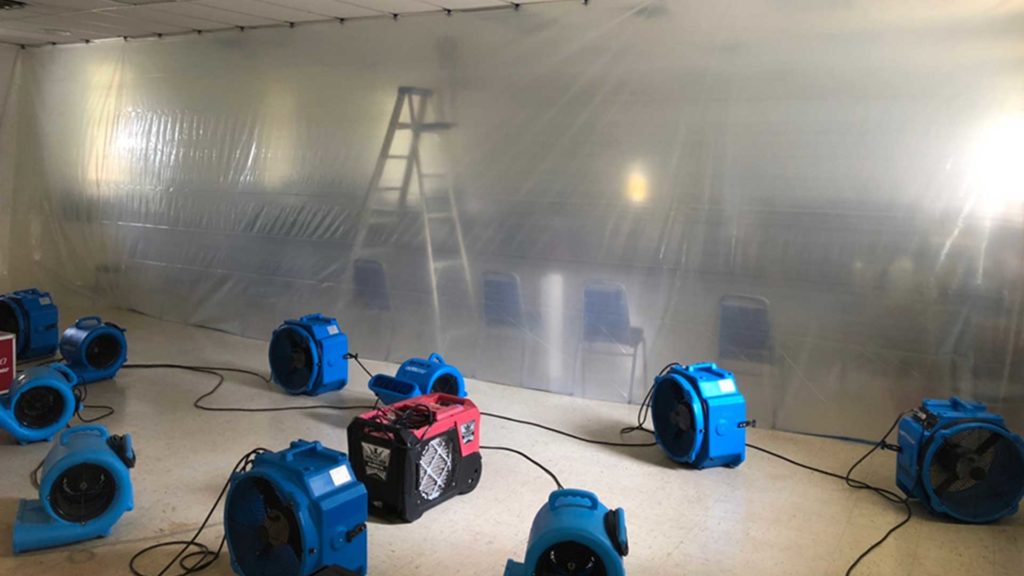
After standing water has been removed, many structural materials continue holding moisture that cannot be seen from the surface. Drywall, framing lumber, insulation, hardwood flooring, cabinetry, concrete, masonry, and subflooring all absorb water differently. Professional structural drying removes this remaining moisture under carefully controlled environmental conditions rather than relying on natural evaporation.
Certified restoration professionals use psychrometry, the science of temperature, humidity, airflow, and moisture movement, to guide every drying project. Before equipment is installed, technicians calculate the proper amount of airflow and dehumidification based on the size of the affected area, the class of water damage, environmental conditions, and the types of materials being dried. These calculations help establish a controlled drying environment that encourages moisture to leave structural materials in a predictable and measurable manner.
Air movers increase airflow across wet surfaces, allowing moisture to evaporate from building materials. Industrial dehumidifiers then remove that moisture from the indoor air, lowering humidity levels so additional moisture continues leaving the structure. Together, these systems create a balanced drying environment that supports efficient structural drying while protecting unaffected areas of the property.
Moisture levels are monitored throughout the project using moisture meters, hygrometers, and other specialized instruments. Rather than estimating when a building is dry, technicians compare current moisture readings with established drying goals based on unaffected materials within the structure. This scientific approach follows the ANSI/IICRC S500 Standard and helps verify that structural materials have returned to appropriate moisture levels before equipment is removed.
Northern Delaware's humid summers and changing seasonal weather make controlled indoor drying especially valuable. Even when outdoor humidity remains high after prolonged rain events, professional drying equipment maintains indoor conditions that continue moving moisture out of structural materials until drying objectives have been achieved.
Reducing the Risk of Mold After Water Damage
Moisture provides the conditions mold needs to grow. Under favorable indoor conditions, mold can begin developing within 24 to 48 hours after water enters a building. Prompt extraction and professional structural drying interrupt those moisture conditions before microbial growth becomes more widespread.
Professional restoration begins by identifying and correcting the source of the water intrusion. Once additional water has been stopped, technicians focus on rapid extraction, controlled structural drying, and continuous moisture monitoring. These steps remove the moisture that supports mold growth while helping preserve more original building materials whenever practical.
If mold growth has already developed, certified professionals follow the ANSI/IICRC S520 Standard for Professional Mold Remediation. Appropriate containment systems isolate affected work areas to reduce the movement of airborne mold spores into unaffected portions of the building. HEPA air filtration devices operate within contained work areas to capture airborne particles while remediation activities are underway.
Structural materials that can be successfully restored are professionally cleaned while moisture conditions continue to be monitored. Materials affected beyond successful restoration because of microbial contamination are selectively removed as part of the remediation process. The objective is to correct the moisture source, remove mold contamination, reduce harmful mold spores within the indoor environment, and restore healthy indoor conditions using recognized industry procedures.
Homes and commercial buildings throughout Bear, Newark, Wilmington, New Castle, Claymont, and surrounding communities often contain concealed areas where moisture can remain hidden after a water loss. Finished basements, crawlspaces, wall cavities, utility rooms, and insulated ceiling assemblies all benefit from professional moisture inspections that verify hidden moisture has been properly addressed before restoration is complete.
Restoring Building Materials Whenever Practical
Professional water damage restoration focuses on preserving original building materials whenever measurable conditions show they can be successfully restored. Modern moisture detection technology, advanced extraction equipment, and controlled structural drying frequently allow drywall, framing, hardwood flooring, cabinetry, and many other structural materials to recover without unnecessary demolition.
Throughout every project, technicians evaluate moisture conditions using objective measurements rather than visual appearance alone. Materials that continue responding to controlled drying remain part of the restoration plan, helping preserve the building's original construction whenever practical. This restoration-first philosophy follows recognized industry standards and often reduces disruption for homeowners, commercial property owners, and occupants.
When prolonged saturation or contamination prevents successful restoration, selective removal supports the overall restoration process while protecting the remaining structure. Limiting removal to only those materials that cannot be effectively restored helps preserve more of the original property while creating appropriate conditions for continued structural drying.
This approach benefits homes and businesses throughout Northern Delaware. Historic properties in Wilmington and New Castle, newer homes in Bear and Newark, commercial office buildings, healthcare facilities, warehouses, schools, and retail centers all benefit from restoration strategies that prioritize preservation before removal whenever practical.
Every restoration decision is supported by documented moisture readings, environmental monitoring, and ANSI/IICRC restoration standards. The goal remains consistent throughout every project: restore original building materials whenever practical while creating a clean, dry, and healthy indoor environment.
Documentation That Supports the Insurance Process
Most property owners experience significant water damage only once, making the insurance process unfamiliar. Professional restoration companies help simplify that experience by documenting every phase of the project from the initial inspection through final moisture verification.
Throughout the restoration project, technicians record moisture readings, environmental conditions, equipment placement, photographs, floor plans, daily monitoring reports, and written observations. These records demonstrate how the building responds during structural drying while providing valuable information for homeowners, commercial property owners, property managers, insurance adjusters, insurance carriers, and referral partners.
Clear communication is just as valuable as technical documentation. Restoration professionals explain inspection findings, review moisture mapping results, discuss drying progress, answer questions about upcoming phases of work, and provide regular project updates supported by measurable moisture data. This collaborative approach helps everyone involved understand how the restoration is progressing while maintaining transparency throughout the project.
Property owners can also help organize the process by contacting their insurance carrier promptly, photographing affected areas when practical, saving receipts for emergency expenses, and maintaining a record of project-related communications. Combined with professional restoration documentation, these records create a complete timeline from the initial water loss through successful structural drying.
Whether assisting a homeowner in Bear, a property manager in Newark, a healthcare facility in Wilmington, or a commercial warehouse in New Castle, detailed documentation supports informed decision-making while demonstrating that recognized ANSI/IICRC restoration standards have guided every phase of the project.
What Affects the Timeline and Cost of Water Damage Restoration?
One of the first questions property owners ask after discovering water damage is how long the restoration process will take. The answer depends on the actual moisture conditions inside the building rather than what is visible on the surface. Many residential structural drying projects are completed within three to seven days, while larger commercial losses or buildings with extensive hidden moisture often require additional time for monitoring and moisture verification before drying equipment can be removed.
Several factors influence the restoration timeline. The category of water involved, the class of water damage, the amount of moisture absorbed into structural materials, the size of the affected area, and how quickly professional restoration begins all affect drying performance. Dense materials such as hardwood flooring, concrete, masonry, structural lumber, and finished basement construction naturally retain moisture longer than drywall or carpeting and often require additional monitoring before drying goals have been achieved.
Project costs are also based on the actual conditions found during the inspection. A leaking water heater affecting one room requires a different restoration strategy than a burst pipe flooding multiple levels of a home or a plumbing failure inside a large commercial warehouse. Certified restoration professionals develop restoration plans using moisture mapping, equipment calculations, documented inspection findings, and ANSI/IICRC standards instead of relying on estimates based only on the size of the affected area.
Beginning restoration promptly often helps preserve more original building materials while reducing the overall scope of the project. Early extraction, controlled structural drying, and continuous moisture monitoring frequently minimize secondary moisture damage and help shorten the overall restoration timeline.
Choosing a Professional Water Damage Restoration Company in Bear
Selecting the right restoration company plays an important role in how efficiently a property recovers after a water loss. Professional restoration combines advanced moisture detection technology, structural drying science, commercial-grade equipment, and nationally recognized ANSI/IICRC standards to restore buildings safely and effectively.
Look for technicians who are certified by the Institute of Inspection, Cleaning and Restoration Certification (IICRC) and who follow the ANSI/IICRC S500 Standard for Professional Water Damage Restoration. Certification demonstrates training in moisture inspection, psychrometry, structural drying, project documentation, and restoration science. These qualifications help ensure restoration decisions are based on measurable moisture conditions instead of assumptions.
Local experience is equally valuable throughout Northern Delaware. Homes and commercial buildings across Bear, Newark, Wilmington, Claymont, Hockessin, New Castle, Saint Georges, Yorklyn, Montchanin, Rockland, and surrounding communities represent a wide variety of construction styles. Historic homes, modern residential developments, office buildings, schools, healthcare facilities, warehouses, retail centers, manufacturing facilities, and multifamily communities each present unique restoration challenges that benefit from local knowledge and experience.
Emergency response capability should also be part of your evaluation. Water continues moving through structural materials until the source has been corrected and controlled drying begins. Companies equipped with advanced moisture detection technology, commercial extraction systems, industrial dehumidification equipment, and comprehensive project documentation help stabilize buildings sooner while preserving more original building materials whenever practical.
Communication also distinguishes experienced restoration professionals. Regular project updates, moisture reports, photographs, daily monitoring documentation, and clear explanations allow homeowners, commercial property owners, property managers, insurance professionals, insurance carriers, and referral partners to understand how the restoration is progressing from the initial inspection through final moisture verification.
Local Experience Makes a Difference Throughout Northern Delaware
Every region presents unique restoration challenges, and Northern Delaware is no exception. Coastal weather systems, heavy seasonal rainfall, winter freezes, older neighborhoods, newer residential communities, finished basements, and mixed commercial construction all influence how moisture moves through a building. Successfully restoring these properties requires both local experience and a thorough understanding of restoration science.
"After serving homeowners and businesses throughout Northern Delaware for many years, we've learned that every water loss presents its own challenges," says Kareem Brown, Owner of Rytech Restoration of Northern Delaware. "Whether we're responding to a flooded basement in Bear, a burst pipe in Newark, a roof leak in Wilmington, or a plumbing failure inside a commercial facility in New Castle County, every project begins with advanced moisture mapping and a comprehensive inspection. Understanding how moisture moves through the different building materials commonly found throughout our region allows us to restore more original materials whenever practical while following ANSI/IICRC standards and keeping our customers informed throughout every step of the restoration process."
Kareem Brown, Owner, Rytech Restoration of Northern Delaware
That local knowledge benefits homeowners, commercial property owners, property managers, insurance professionals, insurance carriers, and referral partners throughout New Castle County. Understanding Delaware's climate, common construction methods, and regional causes of water damage allows restoration professionals to develop drying plans tailored to each property.
Why Property Owners Choose Rytech Restoration of Northern Delaware
Recovering from water damage requires more than powerful drying equipment. Property owners need experienced professionals who understand moisture science, communicate clearly, and provide guidance throughout every phase of the restoration process.
At Rytech Restoration of Northern Delaware, every project begins with a detailed inspection using advanced moisture detection equipment, infrared thermal imaging, commercial extraction systems, industrial dehumidifiers, and continuous moisture monitoring. This science-based approach helps identify hidden moisture, establish measurable drying goals, and verify drying progress throughout the restoration project.
Our certified technicians follow recognized ANSI/IICRC standards while emphasizing restoration whenever practical. Advanced structural drying techniques often preserve original drywall, framing, flooring, cabinetry, and other building materials that might otherwise require unnecessary removal. When prolonged saturation or contamination prevents successful restoration, only those materials that cannot be effectively restored are selectively removed to support the overall restoration process.
Customers also benefit from consistent communication throughout every project. Daily moisture documentation, photographs, equipment monitoring reports, and regular project updates help homeowners, commercial property owners, property managers, insurance professionals, insurance carriers, and referral partners stay informed from the initial inspection through final moisture verification. Whether responding to a residential water loss in Bear or assisting a commercial property in Wilmington, our commitment remains the same: exceptional customer care, science-based restoration, and dependable guidance throughout the recovery process.
Ready to Take the Next Step?
Water damage rarely stays confined to one room. Moisture continues moving through structural materials until the source has been corrected and professional structural drying has begun. Scheduling a prompt inspection helps identify hidden moisture early, preserve more of the original building whenever practical, and establish a restoration plan based on measurable conditions.
If you're looking for professional water damage restoration in Bear and Northern Delaware, Rytech Restoration of Northern Delaware is ready to respond with certified technicians, advanced moisture detection technology, commercial drying equipment, detailed project documentation, and expert guidance throughout every phase of the restoration process.
Whether you own a home, manage commercial properties, oversee multifamily communities, work in the insurance industry, or support customers as a referral partner, our local team proudly serves Bear, Newark, Wilmington, Claymont, Hockessin, New Castle, Saint Georges, Yorklyn, Montchanin, Rockland, Winterthur, and communities throughout New Castle County.
FAQs: Answering Your Pressing Water Damage Restoration Questions
At Rytech Restoration of Northern Delaware, we know how overwhelming water damage can be. That’s why we’ve built a helpful FAQ section to guide you through what to expect during the mitigation process. From understanding each step to knowing how communication and cleanup are handled, our goal is to provide clear, straightforward answers, so you feel informed, supported, and confident every step of the way.


