

Water damage can begin with something as obvious as a flooded basement or as easy to overlook as a slow supply-line leak behind an appliance. In Bear and throughout New Castle County, property owners deal with burst pipes, plumbing failures, appliance leaks, stormwater, sewage backups, and other water intrusions that can affect homes and commercial buildings. Rytech Restoration of Northern Delaware's local guidance specifically identifies burst pipes, flooded basements, malfunctioning appliances, and storm damage among the losses its team handles.
The trouble is that water rarely respects the boundaries of the first wet spot. Moisture can move beneath flooring, behind drywall, through insulation, around cabinets, and into adjoining rooms. ANSI/IICRC S500 recognizes both direct water damage and secondary damage caused by indirect exposure to water, contamination, absorbed moisture, or elevated humidity.
Professional restoration is designed to find and manage those conditions rather than simply make a room look dry again. For homeowners, commercial property owners, property managers, insurance professionals, and referral partners, understanding the difference can prevent common myths from shaping the recovery process.
Myth: “I Can Handle the Water Damage Cleanup Myself”
A mop, wet vacuum, and household fan can remove some visible water. They cannot tell you where that water traveled.
Imagine a dishwasher line leaking overnight in a Bear kitchen. By morning, the homeowner may remove the puddle and dry the exposed floor. Water may already have migrated underneath cabinets, flooring, baseboards, or drywall where towels cannot reach it.
Professional restoration adds moisture detection to the cleanup process. ANSI/IICRC S500 recognizes moisture sensors, invasive and non-invasive moisture meters, thermo-hygrometers, and thermal imaging among the tools that can help restorers evaluate water migration and drying conditions.
Rytech Restoration of Northern Delaware uses IICRC-certified technicians, advanced moisture detection, professional drying methods, and daily job monitoring as part of its water damage service.
Before deciding that a DIY cleanup worked, ask one question: Do you know where the water stopped?
Myth: “Mold Only Develops After a Long Time”
Waiting for visible mold is not a sound way to manage a wet building.
The better strategy is controlling moisture quickly. Prolonged damp conditions can support microbial growth, so professional water restoration focuses on finding wet materials, controlling humidity, and moving those materials toward established drying goals.
Mold does not follow an identical stopwatch in every building. Temperature, humidity, material type, airflow, water exposure, and pre-existing conditions can all influence what happens after materials become wet. Rytech's guidance therefore emphasizes prompt water extraction, drying, and dehumidification rather than waiting for mold to appear.
When mold growth is present, ANSI/IICRC S520 emphasizes controlling contamination close to its source and physically removing mold rather than relying on attempts to simply kill or encapsulate it. Professional procedures can include containment, HEPA filtration, careful removal, cleaning, and controls that reduce the spread of spores and fungal fragments.
For a damp basement or hidden plumbing leak in Bear, Newark, or Wilmington, early moisture control gives the restoration team a better opportunity to limit additional damage.
Myth: “Drying Out My Home Only Takes a Day or Two”
There is no universal two-day drying schedule.
Drywall, carpet, wood framing, concrete, plaster, insulation, and multilayer flooring assemblies hold and release moisture differently. ANSI/IICRC S500 even identifies deeply held or bound water in materials such as plaster, wood, concrete, masonry, multilayer wallboard, and multilayer subfloors as conditions that can require special drying methods, longer drying times, or greater water vapor pressure differences.
Professional structural drying uses measurable goals rather than an arbitrary number of days. Technicians evaluate moisture conditions, control airflow, temperature, and humidity, and monitor how affected materials respond.
That monitoring matters because a room can feel comfortable while materials remain wet. Rytech Northern Delaware includes daily job monitoring among its local service attributes, allowing drying decisions to follow actual conditions rather than the calendar.
The question is not, “Has the equipment been running for two days?” The better question is, “Have the affected materials reached the established drying goals?”
Myth: “A Little Water Can't Cause Much of a Problem”
The size of the visible puddle does not always match the size of the moisture problem.
Consider a refrigerator supply line dripping slowly onto the floor of a Newark home. A small wet area may appear beside the appliance, yet moisture can move beneath finished flooring or into the wall behind it. By the time the leak becomes noticeable, more material may be affected than the surface suggests.
ANSI/IICRC S500 distinguishes primary damage from secondary damage. Secondary damage can result from indirect water exposure and may include absorbed moisture, elevated humidity, microbial growth, or other deterioration.
Professional inspection helps determine whether that little leak stayed little. Moisture detection gives the technician information about the affected materials instead of relying solely on what the eye can see.
For property managers and commercial owners, that same principle applies to a small plumbing leak above a tenant space or behind a restroom wall. A modest leak can become an operational problem when water migrates into adjoining materials.
Myth: “Household Cleaning Products Are Enough for Water Damage Cleanup”
Cleaning a surface and restoring a water-damaged building are two different jobs.
Household cleaners cannot measure moisture inside drywall or determine whether water remains beneath flooring. They also cannot identify the water category, establish drying conditions, or show whether a hidden building material is responding to drying.
ANSI/IICRC S500 defines cleaning as containing, removing, and properly disposing of unwanted substances from an environment or material. Drying is a separate process focused on removing moisture from materials.
Water restoration can therefore involve extraction, cleaning, drying, dehumidification, and moisture monitoring. Rytech's current knowledge describes these as core parts of water damage mitigation.
A floor can look clean and still contain a moisture problem beneath it.
Myth: “Everything Can Always Be Restored After Water Damage”
Rytech takes a restore-first approach because preserving salvageable materials can reduce unnecessary demolition, disruption, and costly repairs. That does not mean every affected material can remain.
The condition of each material drives the decision. Water contamination, exposure time, material composition, depth of moisture, deterioration, and whether the material can be successfully cleaned and dried all influence salvageability.
Contents deserve individual evaluation too. Furniture, documents, electronics, clothing, artwork, photographs, and business records can respond very differently to water. Their sentimental, operational, legal, artistic, or monetary value may also influence the appropriate restoration approach.
Rytech's goal is to restore affected materials when the conditions support successful restoration and identify materials damaged beyond repair for removal. That avoids two costly assumptions: automatically removing everything or assuming everything can be saved.
Myth: “Appliances Are Safe to Use Once They Look Dry”
A dry-looking appliance only tells you about the surface you can see.
Water exposure may involve electrical connections, wiring, motors, insulation, controls, or other internal components. The water source matters too. Equipment exposed near a sanitary supply-line leak presents different conditions from an appliance affected by contaminated water.
Professional water damage restoration helps document the extent of water migration and identifies contents or equipment within the affected area. Specialized equipment can then be referred to an appropriately qualified professional when its condition requires expertise outside the restoration contractor's scope.
Commercial properties face the same question at a larger scale. Restaurants, offices, retail buildings, apartment communities, schools, and other properties throughout New Castle County can contain electrical or specialized equipment within a water-loss area.
Looking dry is not the same as being professionally evaluated.
Myth: “Water Is Water. It’s All the Same.”
Professional restorers classify water according to contamination, and those conditions affect how the loss is managed.
ANSI/IICRC S500 uses three water categories. Category 1 originates from a sanitary source and does not pose substantial risk from dermal, ingestion, or inhalation exposure. Broken water supply lines and certain sanitary fixture or appliance supply-line failures can fall into this category.
Category 2 contains significant contamination and can potentially cause discomfort or sickness. Depending on the circumstances, examples can include dishwasher discharge, washing-machine discharge, and certain toilet overflows without feces.
Category 3 is grossly contaminated and can contain pathogenic, toxigenic, or other harmful agents. Sewage and certain forms of outdoor flooding are common examples.
Contaminated water requires controls that sanitary water may not. S500 directs restorers to prevent contaminants from spreading into areas believed to be uncontaminated, and grossly contaminated environments can require isolation, containment, managed airflow, and appropriate work practices.
The water source changes the restoration strategy, which is why identifying the conditions at the beginning of the project matters.
Myth: “Standard Fans and Dehumidifiers Work Just as Well as Professional Equipment”
A household fan moves air. Structural drying manages moisture within materials and the surrounding environment.
ANSI/IICRC S500 defines a drying plan as a restorer-developed approach that establishes target ranges and methods for controlling humidity, temperature, and airflow so drying goals can be achieved.
Professional equipment becomes part of that plan. Water extraction equipment removes bulk water, air movers support evaporation, and professional dehumidification manages moisture entering the air. Moisture instruments then tell technicians how affected materials are responding.
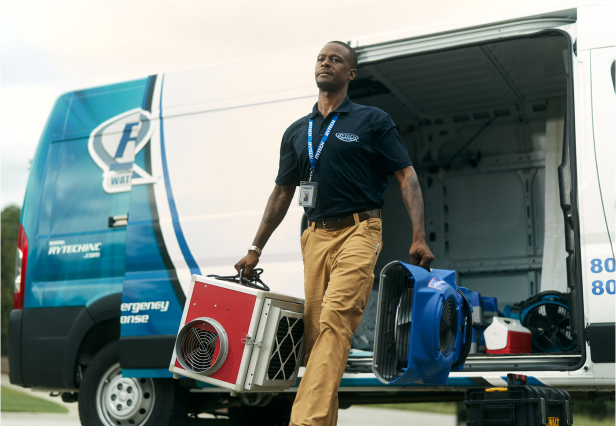
Rytech's local team combines specialized equipment with trained IICRC-certified technicians and advanced drying processes. The Northern Delaware water restoration page also emphasizes assessment before mitigation begins and ongoing monitoring throughout the project.
Equipment does not make the decisions. Measurements, training, and drying science guide how that equipment is used.
Myth: “There Are No Health Risks If Water Is Cleaned Up Quickly”
Quick action can reduce the opportunity for water to spread, but speed does not change what the water contains.
A sanitary plumbing leak and a sewage backup create different conditions. When contamination is present, professional restoration may require containment, PPE, controlled removal, cleaning, and management of airflow to reduce cross-contamination.
S500 directs restorers to minimize the spread of contaminants in grossly contaminated environments. The standard also points to S520 containment principles when activities could aerosolize contaminants.
Mold creates another consideration when damp conditions persist. S520 emphasizes physical source removal and controls designed to limit dust, aerosolization, and movement of fungal spores into unaffected areas.
Professional assessment connects the cleanup approach to the conditions actually present rather than assuming that every water loss carries the same risks.
Myth: “Professional Water Damage Restoration Is Always Too Expensive”
Professional restoration should be evaluated against the cost of unmanaged moisture, unnecessary material removal, prolonged business interruption, and damage that becomes more difficult to address over time.
Advanced moisture detection helps define the actual affected area. That supports targeted drying and Rytech's restore-first approach instead of assuming every material near the loss needs to be removed.
For businesses in Bear, Newark, New Castle, or Wilmington, the calculation also includes operations. Water can affect work areas, equipment, inventory, tenants, employees, and customers. Rytech Northern Delaware provides commercial restoration for losses of different sizes and emphasizes rapid mitigation designed to reduce disruption.
Insurance can also be unfamiliar territory for a property owner. Rytech works with insurance carriers and adjusters, offers direct insurance billing, and provides documentation to help customers understand the process. Its local insurance resources emphasize prompt policyholder contact, advanced drying methods that can minimize demolition, and communication between the restoration team and insurance professionals.
That collaboration gives homeowners, property managers, agents, and adjusters a clearer view of what happened and what the restoration process requires.
Myth: “Once the Area Looks Dry, There’s No Lasting Problem”
Surface appearance cannot verify the moisture condition inside a building material.
Drywall may regain its normal color before moisture deeper in the material has reached an acceptable level. Hardwood can feel dry on top while moisture remains below the surface. Multilayer subfloors, plaster, wood, concrete, and masonry can hold deeply bound water that takes additional effort to remove.
Professional drying therefore relies on moisture readings rather than appearance alone. The drying process controls humidity, temperature, and airflow while technicians monitor the materials that were identified as affected.
Think about a finished basement in Bear after a plumbing failure. The carpet surface may feel dry first, while the cushion, baseboard, drywall, or other materials tell a different story.
Your eyes can help identify obvious damage. Moisture instruments help evaluate what the surface cannot show.
Myth: “If I Don’t See Damage Right Away, There Isn’t a Problem”
Hidden water does not need a visible stain to affect a property.
Water can travel beneath flooring, behind baseboards, through wall cavities, and into adjoining areas. A slow plumbing leak may remain unnoticed until flooring changes shape or a musty odor develops. Moisture from an upper floor can also move downward through ceilings and wall assemblies before the full path becomes obvious.
Rytech Northern Delaware's current local service information emphasizes property damage inspections and advanced moisture detection as part of identifying the extent of a loss. The team documents findings with photographs and diagnostic information so customers can make informed decisions.
Imagine a pipe leaking behind a restroom wall in a Wilmington office. The hallway side may look normal while moisture has reached drywall, insulation, or flooring on the other side.
If the question is “Can I see water?” you may miss the larger issue. Ask instead, “Have the surrounding materials been checked?”
How Professionals Decide What Can Be Restored
Restoration versus removal is not a room-wide yes-or-no decision.
Professionals consider contamination, material composition, exposure time, deterioration, moisture conditions, structural integrity, and the ability to successfully clean and dry each material. Concrete responds differently from drywall. Wood framing behaves differently from carpet, and a multilayer flooring system presents different drying challenges from an exposed hard surface.
Contents introduce additional considerations. A family photograph, business document, electronic device, upholstered chair, or piece of artwork can have a value that goes beyond the item's replacement price. Specialized restoration may therefore make sense for some possessions even when another item exposed to the same water does not justify the same approach.
This is where accurate inspection supports Rytech's restore-first philosophy. Salvageable materials can be targeted for restoration, while materials damaged beyond repair can be identified and removed.
The result is a more measured approach to the property instead of demolition based on assumptions.
Local Experience Matters in Bear and New Castle County
Industry standards establish the technical framework for professional restoration. Local experience helps a restoration team apply those principles to the buildings, weather, and property types found throughout Northern Delaware.
Rytech Restoration of Northern Delaware is based in Bear and serves New Castle County communities including Newark, Claymont, Hockessin, New Castle, Montchanin, Rockland, Saint Georges, Winterthur, Yorklyn, and Wilmington. Its current site describes experience responding to everything from apartment properties in Bear to historic homes around the Brandywine and downtown commercial spaces.
That variety matters during a water loss. Northern Delaware properties can include finished basements, wood framing, drywall, masonry, concrete, carpet, hardwood, cabinets, insulation, and multilayer flooring systems. A burst pipe, appliance failure, plumbing leak, flooded basement, or storm can affect those materials differently depending on where the water travels.
Owner Kareem Brown puts that local perspective into practical terms:
“Working with property owners around Bear and New Castle County reinforces one lesson again and again: the first wet area does not always show the full water loss. Northern Delaware has homes, apartments, historic properties, and commercial buildings with wood framing, drywall, masonry, concrete, hardwood, carpet, cabinets, and layered flooring systems that can all respond differently to moisture. Burst pipes, appliance failures, plumbing leaks, flooded basements, and storms can send water into places that look completely normal from the surface. Our local experience helps us know where to investigate, and professional moisture detection gives our team the information needed to make restoration decisions based on the actual condition of the property.”
Kareem Brown, Owner, Rytech Restoration of Northern Delaware
Rytech brings more than 30 years of company restoration experience to that local operation, supported by IICRC-certified technicians, standardized restoration practices, advanced drying methods, and a customer-care model built around fast response and clear communication.
Why Trust Professional Water Damage Restoration?
Professional restoration replaces assumptions with inspection, measurements, documentation, and defined drying procedures.
For a homeowner, that means having someone determine what became wet and explain what needs to happen next. A commercial property owner or manager gains a team focused on controlling damage while reducing unnecessary business interruption. Insurance professionals receive documentation and communication that help support an efficient claim process.
Rytech Restoration of Northern Delaware provides 24/7 emergency service, IICRC-certified technicians, daily job monitoring, advanced drying processes, insurance assistance, direct insurance billing, and residential and commercial capabilities. The local operation is licensed, bonded, and insured.
Agents and adjusters gain another advantage from consistency. Rytech's insurance program emphasizes rapid policyholder contact, trained technicians, moisture detection, advanced drying methods, and a technology-driven restoration process.
Referral partners benefit from that customer experience as well. A plumber, property manager, real estate professional, or other trusted local professional wants the person they refer to receive responsive service and clear communication. Rytech recognizes that each referred customer reflects on the professional who made the recommendation.
When a burst pipe, appliance failure, sewage backup, storm, or hidden plumbing leak affects your property, professional water damage restoration services in Bear can help identify the moisture footprint, evaluate affected materials, control the drying environment, and document the restoration process.
Get Inspected to Stay Protected With Rytech Restoration of Northern Delaware
A flooded basement in Bear, hidden appliance leak in Newark, plumbing failure in New Castle, or commercial water loss in Wilmington can reach beyond the area that first appears wet. Professional inspection gives you documented information about the affected materials so the next decisions can follow actual property conditions rather than guesswork.
Rytech Restoration of Northern Delaware provides 24/7 response throughout Bear, New Castle County, and surrounding Northern Delaware communities. The local team combines IICRC-certified technicians, advanced moisture detection, professional drying methods, daily job monitoring, empathetic customer care, and insurance coordination to help residential and commercial customers move through the restoration process with confidence.


